

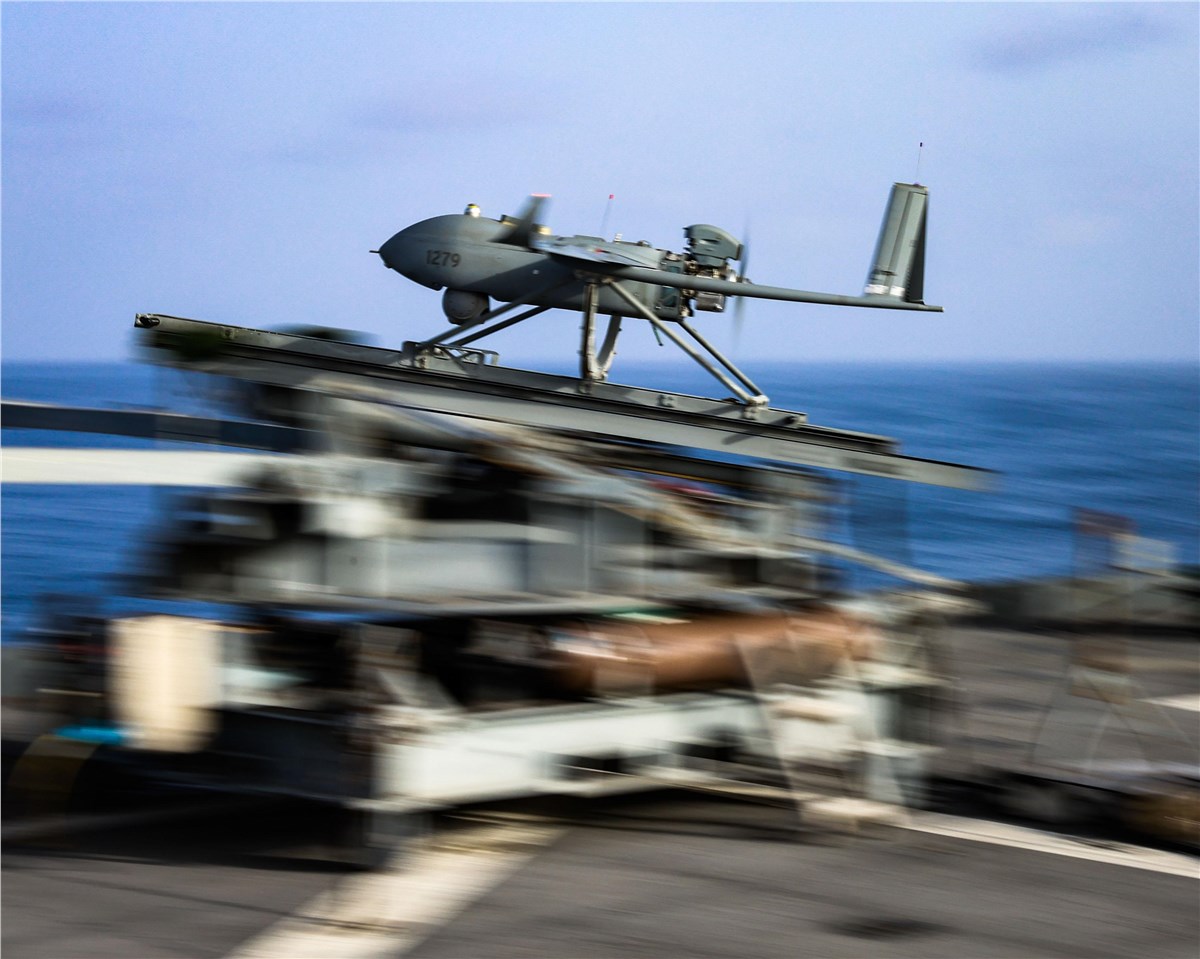
The Navy and Marine Corps Small Tactical Unmanned Aircraft Systems (UAS) program office (PMA-263) has announced that its Intelligence, Surveillance, and Reconnaissance (ISR) Services UAS have surpassed one million flight hours supporting land and sea-based operations. The milestone was achieved by sailors during routine mission support in the 6th Fleet.
Since the program’s inception in 2005, PMA-263 has completed more than 50 UAS installations aboard Navy and Military Sealift Command (MSC) ships, and has operated from over 50 land-based locations worldwide. The ISR Services team ensures that ships in the 4th, 5th, 6th, and 7th Fleets, along with global land-based operations, are equipped to provide day-and-night ISR support to joint force and coalition partners.
“Every hour flown represents more than mission success – it reflects the resilience of our people, the trust of our partners, and the impact we’ve had on history,” said Gregg Skinner, PMA-263 program manager. “Together, we’ve supported operations in every corner of the globe, advanced unmanned systems into the fight, and stood ready in times of uncertainty.”
Currently, more than a dozen ships are equipped with ISR Services UAS, allowing naval vessels to deploy and recover aircraft in support of various missions. Sea- and land-based systems include the Boeing Insitu MQ-27 ScanEagle and the Textron MQ-19 Aerosonde, each delivering unique capabilities to the warfighter. These systems provide continuous day-and-night surveillance, enabling around-the-clock mission support.
The UAS installations are optimized for seamless transfer of full-motion video and other sensor data to personnel in critical locations. The intelligence gathered plays a vital role in tactical operational decision-making and long-term intelligence collection, enhancing Navy and Marine Corps maritime domain awareness and operational readiness.
